Mashq Studio › Arabic calligraphy
Arabic calligraphy
Arabic calligraphy (al-khatt al-'arabi) is the art of writing the Arabic script by hand with a reed pen, by rules of proportion that each script keeps. This page gathers what Mashq Studio holds about it: the scripts, the pen and its measure, a history that names its sources, the calligraphers, and the ways to learn it or to write a word now.
Write a word in Arabic calligraphy now
It opens the Arabic calligraphy generator with your word set. Designing is free, with no account. For your own site: an Arabic calligraphy box.
Arabic calligraphy styles: the seven scripts
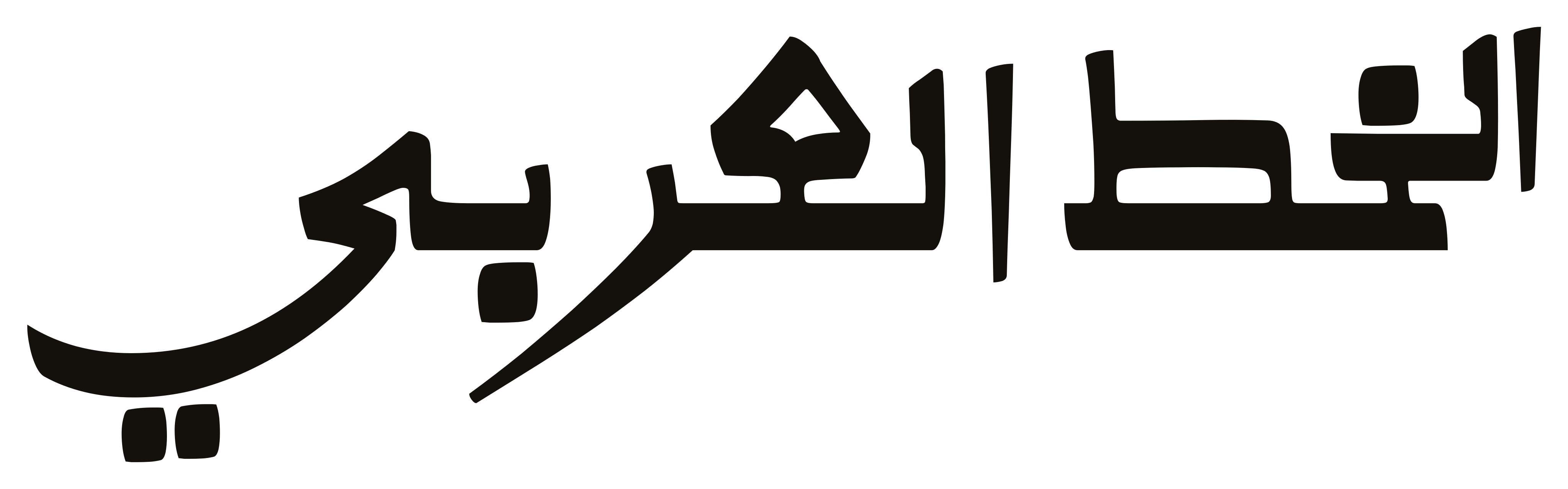
The two words الخط العربي (Arabic calligraphy) in each script, as the Studio sets them. Under each: its measure, the essay that tells its story, a page to write in it, and its lessons.
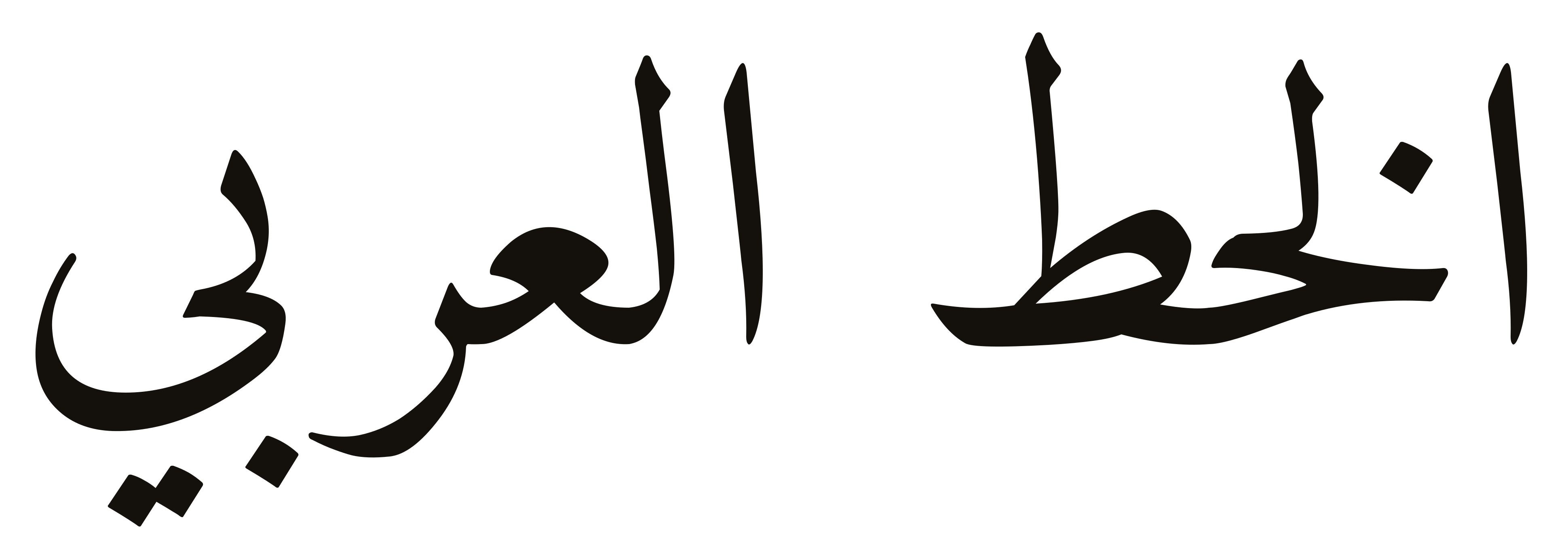
Naskh
The clear book hand, the easiest to read. Its alif is five dots tall.
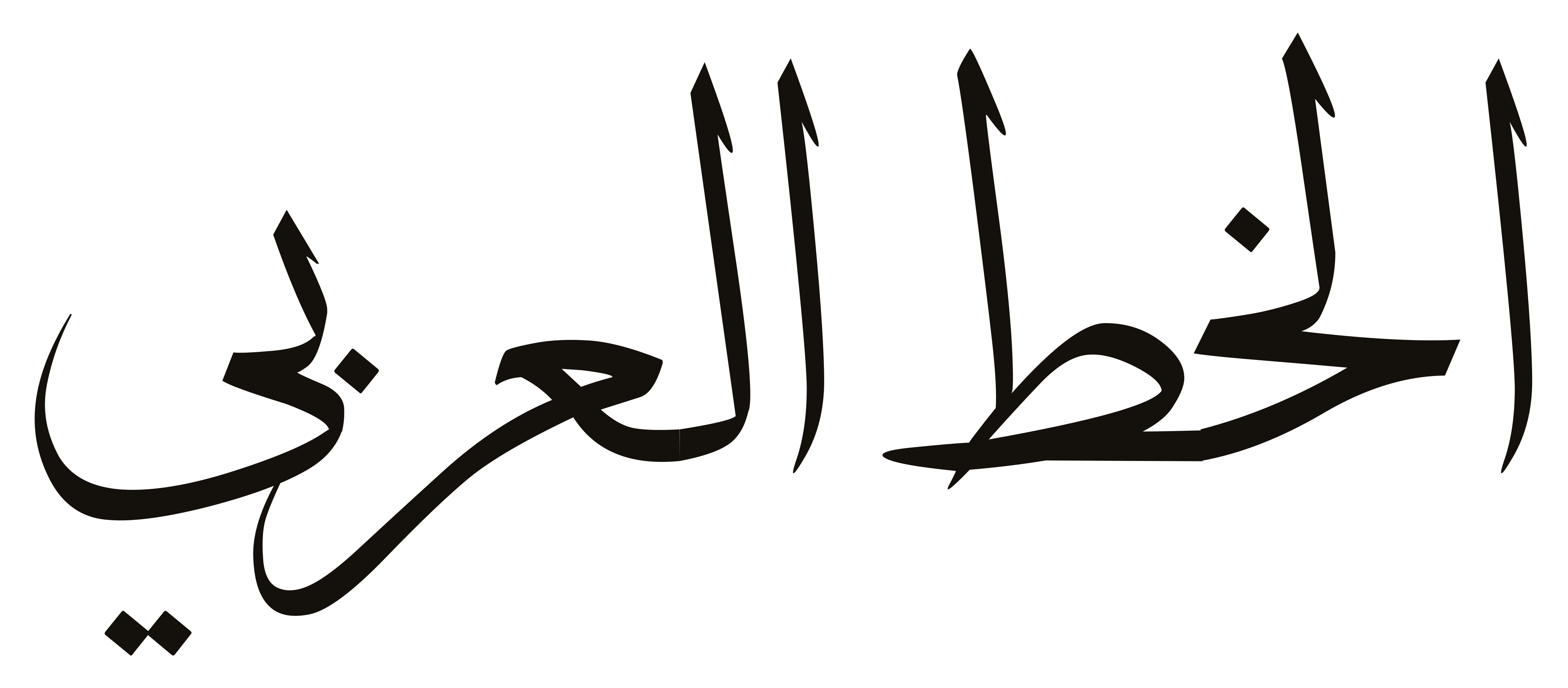
Thuluth
Tall and stately, the script of titles and mosque panels. Its alif is seven dots tall.
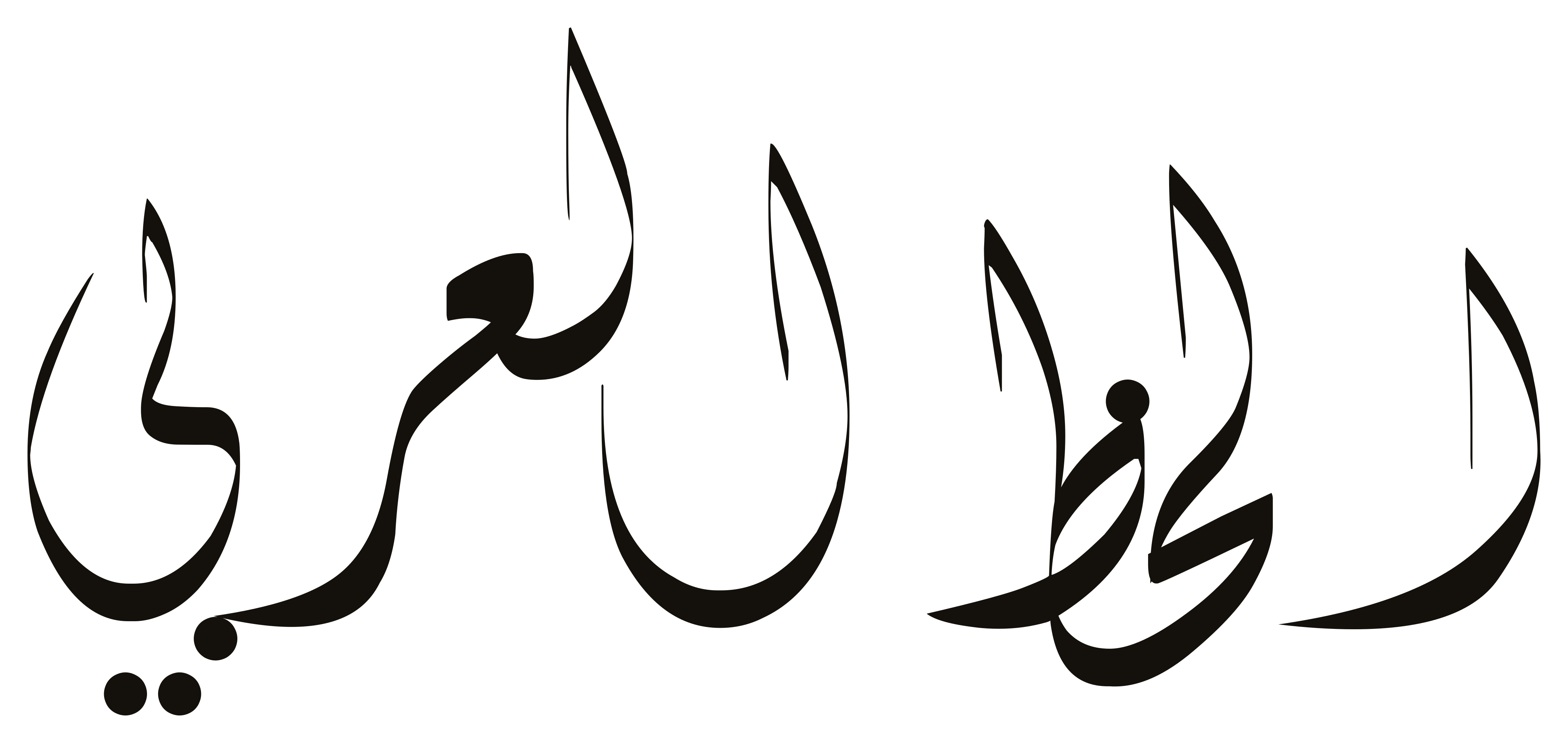
Diwani
Flowing and ceremonial, the one most people choose for a name. Its alif is six dots tall.
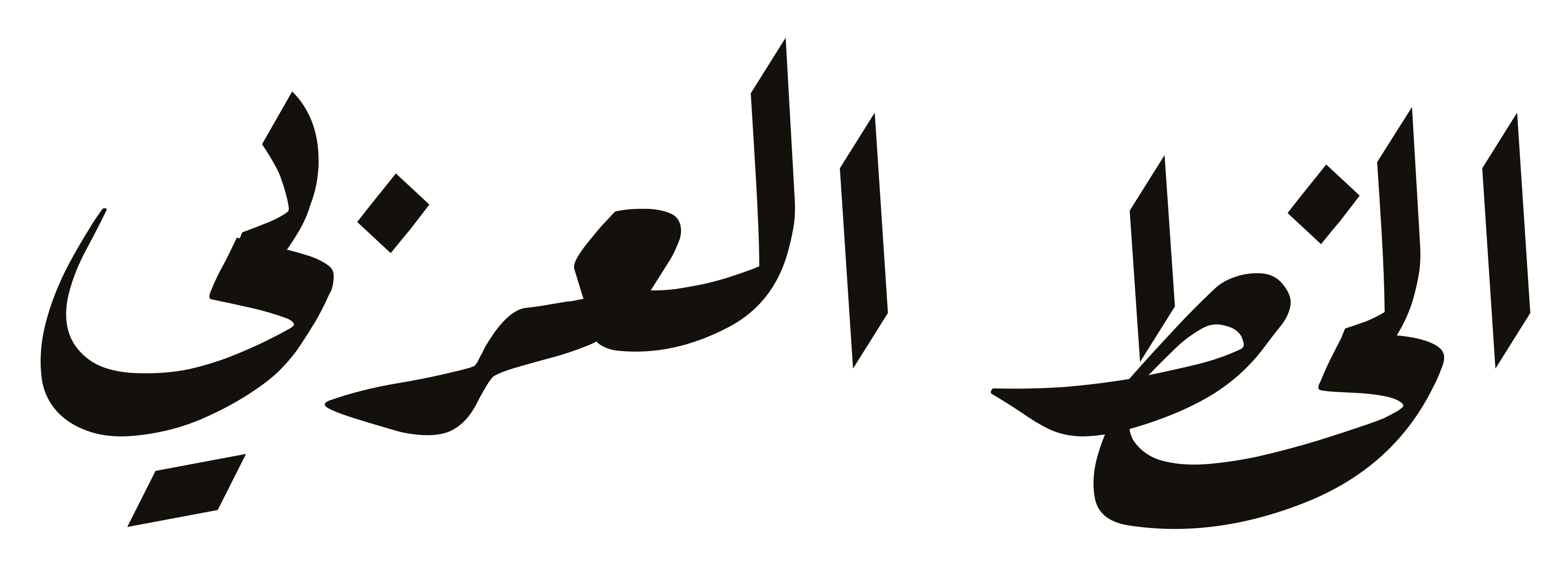
Ruq'ah
Short and quick, the everyday handwriting. Its alif is three dots tall.
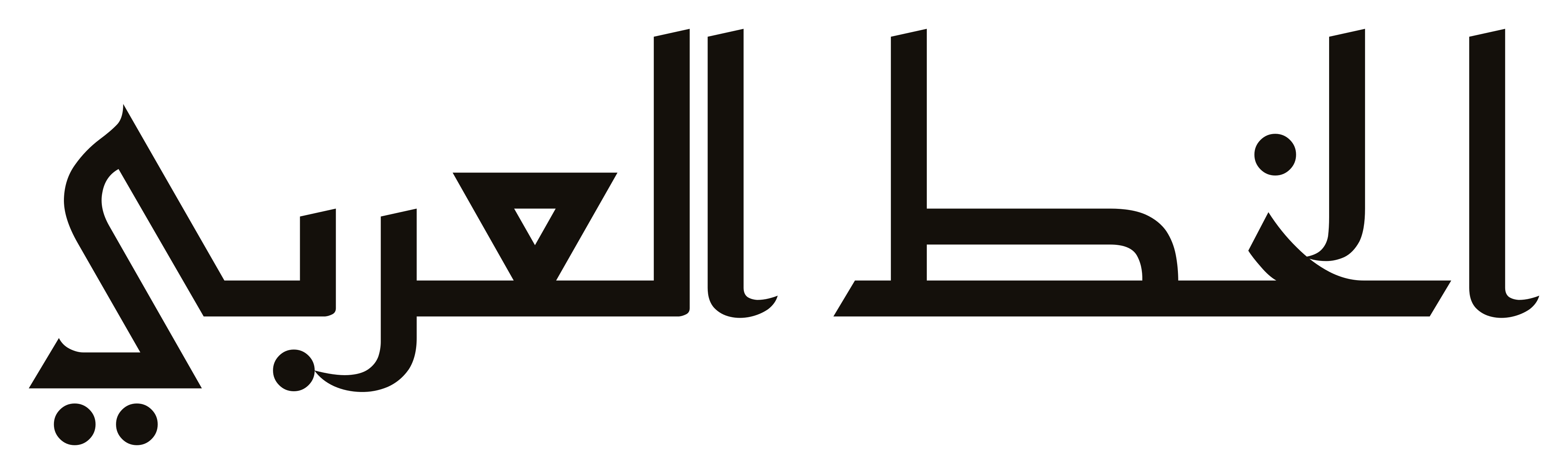
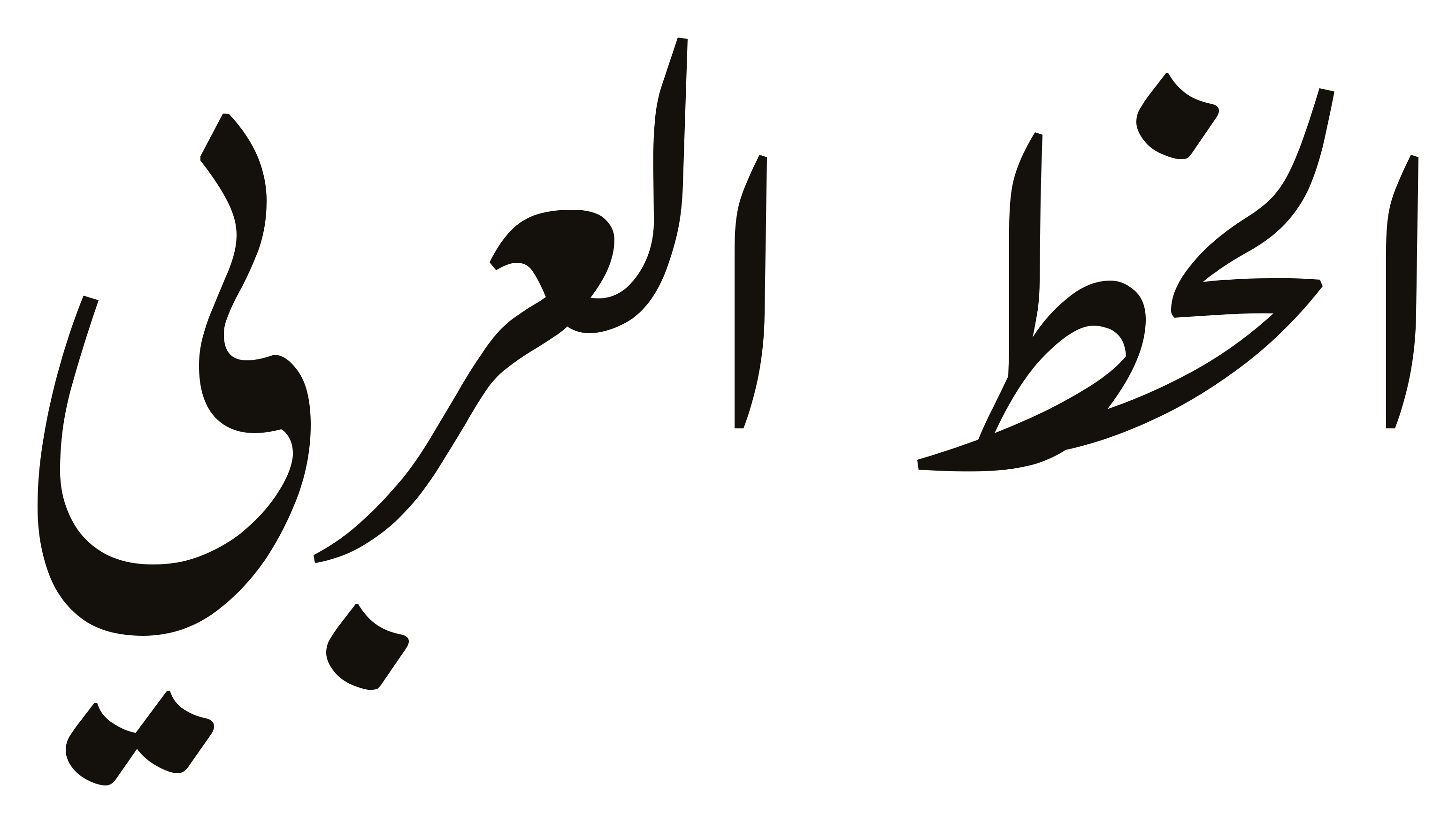
Farsi (Nastaliq)
Sloping, hanging lines, the hand of Persian and Urdu poetry. Its alif is three dots tall.
Not sure which one? Which script should you choose?
Ready pictures: free Arabic calligraphy to download, 71 lines as PNG and SVG.
The pen and the measure
The dot is made by setting the whole width of the nib on the paper. It is a rhombus standing on its corner, two corners up and down, two left and right, and it is measured from corner to corner. Because it comes from the pen, the unit changes with the pen: a broad nib makes a large script, a fine nib a small one, and the proportions stay the same. The number of dots in the alif depends on the script, and the alif sets every other measure.
The alif is five dots tall in Naskh, seven dots tall in Thuluth, three dots tall in Ruq'ah, six dots tall in Diwani and three dots tall in Farsi. Kufi is built on a grid and is not measured in dots. The measure in dots, and where it is read.
The Ottoman teachers said that a straight cut gives firm letters, a strongly slanted cut gives weak but sweet ones, and the middle is best. Each script has its own degree: ta'liq is cut less obliquely than thuluth, naskh less again, and ruq'a almost straight.
From the essay on the reed pen
Qalam, the reed pen
A qalam is the calligrapher's reed pen: it is made from a cut, dried reed and used for Islamic calligraphy.
The measure in dots (mizan)
The mizan is the measure of the letters in dots: the dot, the mark the pen leaves when drawn its own width, is the unit, and the alif is the yardstick.
Tashkeel, the Arabic diacritics
Tashkeel is the set of supplementary diacritics of the Arabic script, which include the short-vowel marks called ḥarakāt.
Kashida (tatweel)
Kashida, also called tatweel, is the lengthening of the line that joins Arabic letters, used to justify a line by elongating letters rather than widening the spaces.
A short history of Arabic calligraphy
Each passage here is quoted from one of the Studio's essays, and the essay names its sources.
Where the letters came from
Most scholars trace the Arabic letters to the script of the Nabataeans, the trading kingdom of Petra and Hegra. A tombstone from al-Ula, dated 280, is cut in a Nabataeo-Arabic hand, halfway between the two. At Zabad near Aleppo (512), Jabal Usays (528) and Harran south of Damascus (568), the letters can be read as Arabic.
Read the essay and its sources
The first written Qur'ans
Muslim tradition holds that the revelations, received between 610 and 632, were kept first in memory and on scattered materials, gathered into one book under Abu Bakr, and fixed in a standard copy under Uthman around 650.
Read the essay and its sources
Ibn Muqla and the measure
Abu Ali Muhammad ibn Ali ibn Muqla was born in Baghdad on 21 Shawwal 272 (31 March 886), into a family of calligraphers. What Ibn Muqla and his brother did was to put the rounded scripts under measure, letter by letter, against the alif.
Read the essay and its sources
Naskh, the copyists' hand
Round, quick hands were in use from the first Islamic century, beside the angular script of the Qur'an. Because the book trade used it, it was called warraqi, the stationers' hand, and naskhi, the copyists' hand. Encyclopaedia Iranica places naskh's real rise after Ibn Muqla, when it gained rules and slowly grew fine enough for most Qur'ans and books.
Read the essay and its sources
The western lands
Arabic writing reached North Africa with the conquests of the seventh century, and the first scribes of Ifriqiya and al-Andalus wrote angular hands.
Read the essay and its sources
The Persian hand
Iranians call the script nasta'liq, Arabs al-khatt al-farisi, 'the Persian hand', and Ottoman Turks simply ta'liq. Its forerunners appear in the fourteenth century, when books copied in naskh in western Iran begin to lean towards hanging forms.
Read the essay and its sources
The Ottoman chancery
The name means 'of the divan', because the hand was written only there. Fifteenth-century manuals on writing do not name it, yet documents from the reign of Mehmed II (1451–1481) are written in it. The hand matured from the sixteenth to the eighteenth century and reached its full proportions in the nineteenth, in the offices of the imperial council and the Sublime Porte.
Read the essay and its sources
From the pen to print
The first Arabic letters in a printed book were cut in wood: an alphabet in Bernhard von Breydenbach's pilgrimage book, printed at Mainz by Erhard Reuwich in 1486.
The calligraphers
Each calligrapher has a page with a life, dates, works and their sources, from Ibn Muqla to calligraphers of today. The calligraphers' index.
How to learn Arabic calligraphy
Arabic calligraphy as a piece you keep
The word you write here can be made to order as wall art, a tray or a box. Arabic calligraphy in the UAE: wall art and pieces · How your design is made · Original works by calligraphers
Questions about Arabic calligraphy
What is Arabic calligraphy?
Arabic calligraphy is the art of writing the Arabic script by hand with a reed pen, by rules of proportion that each script keeps. In Arabic it is called al-khatt al-'arabi.
What are the main styles of Arabic calligraphy?
Mashq Studio writes seven families: Naskh, Thuluth, Diwani, Ruq'ah, Kufi, Farsi (Nastaliq) and Maghribi. Each is shown on this page in its own outlines, with the essay that tells its story.
How are the letters measured?
In dots of the pen itself. The alif is five dots tall in Naskh, seven dots tall in Thuluth, three dots tall in Ruq'ah, six dots tall in Diwani and three dots tall in Farsi. Kufi is built on a grid and is not measured in dots.
What pen is Arabic calligraphy written with?
A reed pen, the qalam, whose nib is cut at a slant. Each script has its own degree of slant, and the width of the nib sets the size of the dot that every letter is measured in.
Can I write Arabic calligraphy online?
Yes. Type a word in the box on this page: the Arabic calligraphy generator sets it in the script you choose, free and with no account, and you can download it.
How can I learn Arabic calligraphy?
Mashq Learn teaches it on screen, one letter at a time, each letter measured in dots. The first lessons are free, and practice sheets can be printed at home.
Which Arabic script has straight letters and sharp angles?
Kufi. It is the angular, geometric script, built on a grid, and the oldest of the scripts on this page. Naskh, Thuluth, Diwani, Ruq'ah and Farsi are the rounded, cursive ones.
What are the six main styles of Arabic calligraphy?
School books usually name six: Kufi, Naskh, Thuluth, Ruq'ah, Diwani and Farsi (Nastaliq). The classical tradition also speaks of "the six pens", which is a different list: Thuluth, Naskh, Muhaqqaq, Rayhani, Tawqi' and Riqa'.
Sources
- M. Uğur Derman, "Hat", TDV İslâm Ansiklopedisi, vol. 16, 1997, and 7 more on the essay's page.
- Abdülkerim Özaydın, "İbn Mukle", TDV İslâm Ansiklopedisi, vol. 20, 1999, and 7 more on the essay's page.
- Muhittin Serin, "Sülüs", TDV İslâm Ansiklopedisi, vol. 38, Istanbul, 2010, and 5 more on the essay's page.
- M. Uğur Derman, "Nesih", TDV İslâm Ansiklopedisi, vol. 33, 2007, and 5 more on the essay's page.
- Umberto Bongianino, The Manuscript Tradition of the Islamic West: Maghribi Round Scripts and Andalusi Identity, Edinburgh University Press, 2022, and 8 more on the essay's page.
- Ali Alparslan, "Nesta'lik", TDV İslâm Ansiklopedisi, vol. 33, Istanbul, 2007, and 6 more on the essay's page.
- Ali Alparslan, "Dîvânî", TDV İslâm Ansiklopedisi, vol. 9, Istanbul, 1994, and 5 more on the essay's page.
- Wikipedia (English), "Kitab Salat as-Sawai", "Paganino Paganini" and "Medici Oriental Press", and 7 more on the essay's page.
- M. Uğur Derman, "Kalem", TDV İslâm Ansiklopedisi, vol. 24, 2001, and 4 more on the essay's page.
Last reviewed: 2026-11-15