Mehmed Şefik Bey
1820–1880 · Istanbul
Mehmed Şefik was born in Beşiktaş, Istanbul, around 1820. He left clerical work at the Imperial Council to study calligraphy, took a thuluth-naskh diploma from Ali Vasfi Efendi around 1835, and after Ali Vasfi's death became the pupil of Kazasker Mustafa İzzet, his aunt's husband, living in his house for thirty years. In 1845 he took over his teacher's posts as calligraphy master to the palace servants and the imperial band and held them for 34 years. TDV ranks him first among Kazasker's pupils in jali thuluth, which he wrote quickly and often without correction. After the 1855 earthquake he and Abdülfettah Efendi spent three and a half years renewing the inscriptions of the Great Mosque of Bursa. His jali thuluth survives over the gate of the former War Ministry, now Istanbul University (1865), and in the tile band of Surat Yasin on the Dome of the Rock (1876). He died in 1880.
Achievements
- Ranked by TDV first among Kazasker Mustafa İzzet's pupils in jali thuluth, which he wrote fast and often without correction.
- Wrote the jali thuluth over the gate of the former War Ministry, now Istanbul University's main gate (1865).
- Designed the tile band of Surat Yasin around the Dome of the Rock in Jerusalem (1876).
- With Abdülfettah Efendi renewed the inscriptions of the Great Mosque of Bursa after the 1855 earthquake, over three and a half years.
- Taught calligraphy to the palace servants and the imperial band for 34 years from 1845.
- Was the first, outside the Imperial Council, to write jali diwani at large size as panels (TDV); one is in the Great Mosque of Bursa.
Taught by: Ali Vasfi Efendi, Kazasker Mustafa İzzet Efendi, Melekpaşazâde Ali Haydar Bey
Taught: Hacı Hasan Rıza Efendi, Çırçırlı Ali Efendi, Tahsin Hilmi Efendi, Bursalı Râşid Efendi, Süleyman Vasfi Efendi, Yûsuf Sabri Efendi, Ömer Fâik Efendi, Çerkez İbrâhim Alâeddin Bey
His work
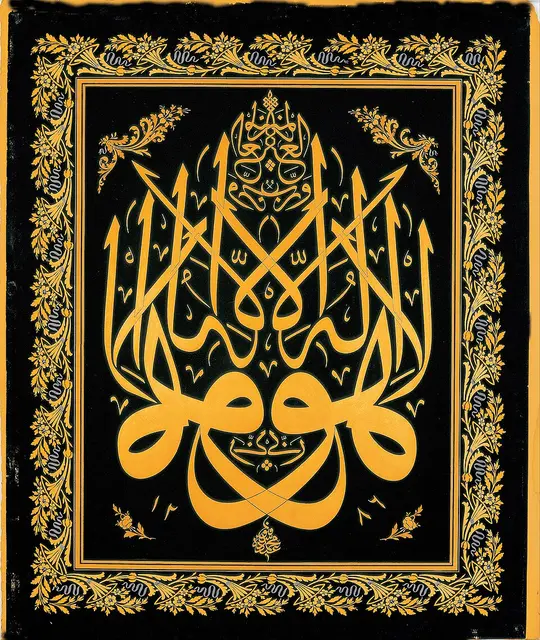
1869–1870 · Sakıp Sabancı Museum, Istanbul
Photo: Wikimedia Commons, public domain
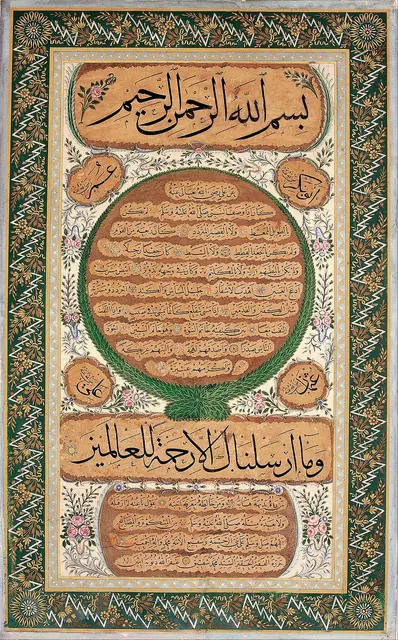
1853–1854 · Sakıp Sabancı Museum, Istanbul
Photo: Wikimedia Commons, public domain
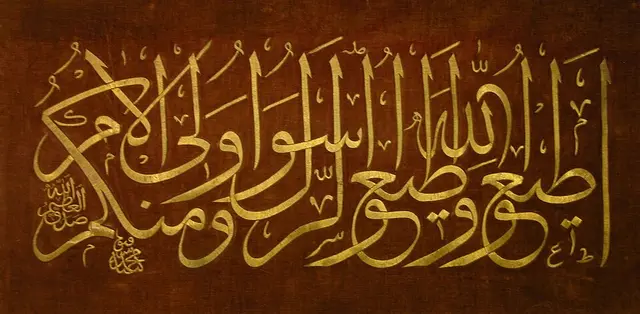
mid-19th century · Metropolitan Museum of Art, New York
Photo: Wikimedia Commons, CC0
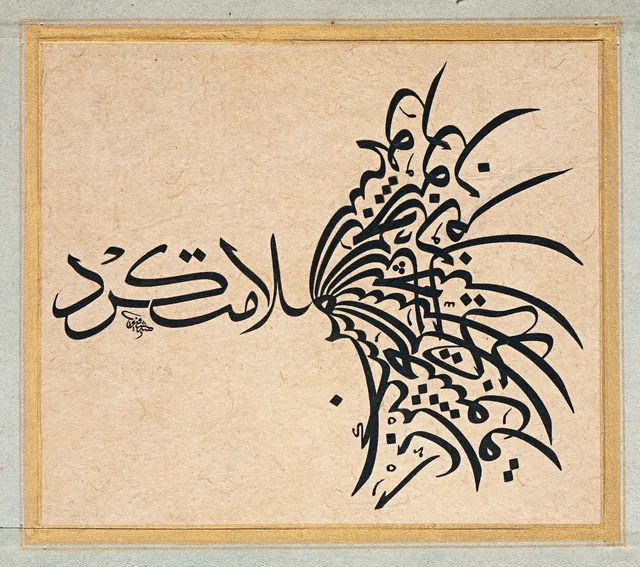
1870 · Topkapı Palace Museum Library, Istanbul (per the Commons record)
Photo: Wikimedia Commons, CC0
Write in the tradition this hand shaped.
Write in this tradition now →Living calligraphers you can buy from — signed originals on paper, from AED 550: Anwar Alhulwani (Thuluth) · Ahmed Alhawary (Jali Thuluth, Naskh) · Rasha Kasim (Kufi) — or every Thuluth piece the store makes: Thuluth collection.
Sources
- TDV İslâm Ansiklopedisi, 'MEHMED ŞEFİK BEY': life 1820–1880, teachers, posts, Bursa, inscriptions, students islamansiklopedisi.org.tr
- Turkish Wikipedia: birth 1819, works, manner of death tr.wikipedia.org
- Arabic Wikipedia: Arabic name form, 1235–1297 AH, works ar.wikipedia.org
- Met Museum record of the embroidered panel (via Commons) commons.wikimedia.org
- Wikidata item wikidata.org
Written by the MASHQ studio · last updated 2026-10-05. Further reading, the standard references in English: Sheila S. Blair, Islamic Calligraphy (Edinburgh University Press, 2006) · Annemarie Schimmel, Calligraphy and Islamic Culture (New York University Press, 1984) · Yasin Hamid Safadi, Islamic Calligraphy (Thames and Hudson, 1978).